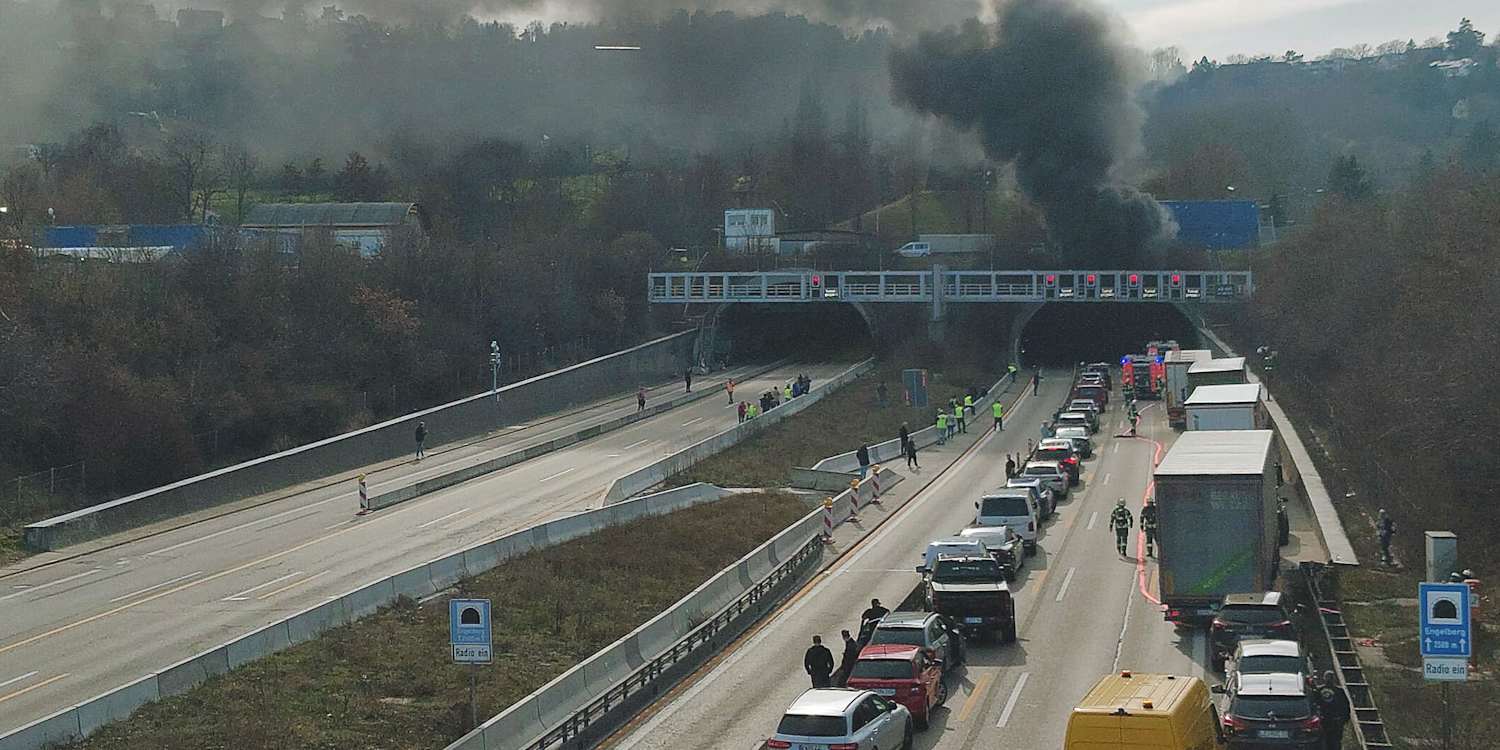
The morning commute on Germany’s A81 near Stuttgart was thrown into disarray on March 3, 2026, following a severe incident within the Engelbergtunnel. What began as a routine Tuesday afternoon rapidly escalated into a major emergency when a truck trailer ignited inside the tunnel, triggering a full closure of one of Baden-Württemberg’s most vital and busiest traffic arteries. This significant Unfall Engelbergtunnel not only caused immediate chaos but also cast a long shadow over regional traffic infrastructure, highlighting critical questions about tunnel safety and emergency response.
The fire, which broke out in the Weströhre (west tube) of the Engelbergtunnel, led to extensive damage, major traffic disruptions, and a massive deployment of emergency services. As commuters grappled with kilometer-long traffic jams and detours, authorities worked tirelessly to manage the crisis and assess the unprecedented scale of the destruction. This article delves into the details of the incident, its immediate aftermath, the heroic actions of those involved, and the long-term implications for Germany's road network.
The Incident Unfolds: A Detailed Account of the Engelbergtunnel Fire
At approximately 2:20 PM on Tuesday, March 3, 2026, an unsuspecting afternoon took a dramatic turn inside the Engelbergtunnel. A truck trailer, reportedly laden with refrigerators, suddenly caught fire in the Weströhre (west tube) of the tunnel, which carries traffic in the southbound direction towards Stuttgart, Karlsruhe, and Munich. The location, near the tunnel portal, allowed for a crucial, life-saving intervention.
Eyewitness accounts and official reports confirm the rapid escalation of the blaze. The LKW driver, demonstrating remarkable presence of mind and courage, managed to uncouple the burning trailer from the truck. This quick-thinking action was pivotal, preventing the fire from spreading to the tractor unit or other vehicles, which could have resulted in a far more catastrophic multi-vehicle inferno within the confined tunnel space. His immediate action undoubtedly averted further tragedies and significantly aided the subsequent emergency response.
Following the ignition, emergency protocols were activated, leading to an immediate full closure of the Engelbergtunnel in both directions. This was a necessary measure to ensure the safety of motorists and to allow rescue teams unimpeded access. Firefighters swiftly began their arduous task of battling the intense flames, while police and rescue personnel coordinated efforts to secure the area and evacuate any trapped individuals. The sheer scale of the Unfall Engelbergtunnel necessitated an all-hands-on-deck approach from various agencies.
The initial hours were characterized by intense firefighting operations. Despite the challenging conditions posed by the smoke and heat within the tunnel, emergency services managed to bring the flames under control relatively quickly. Concurrently, efforts were focused on ventilating the tunnel tubes, a critical step to clear toxic smoke and allow for safer access and assessment of the damage.
Unprecedented Damage and Heroic Efforts
While the immediate fire was contained, the true extent of the devastation became apparent only as firefighters gained full access to the Weströhre. The images emerging from the tunnel, shared by the Autobahn GmbH, depicted a harrowing scene: the truck trailer was reduced to a mere skeleton, its contents incinerated. However, the structural damage to the tunnel itself was perhaps even more alarming.
Initial assessments revealed "massive concrete spalling" on the tunnel ceiling of the affected Weströhre. This refers to the breaking away of layers of concrete, a dangerous indicator of structural compromise due to the extreme heat. Furthermore, critical infrastructure within the tunnel was severely impacted; the cables for the tunnel control system and the crucial fire alarm system were melted and destroyed. This extensive damage underscores the ferocity of the blaze and the inherent risks of such incidents in enclosed spaces.
The human cost of the incident, while thankfully not catastrophic, was still significant. Three individuals suffered from smoke inhalation, two of whom required hospitalization. Beyond these direct casualties, rescue workers provided care for approximately 50 other people present in the tunnel or immediately outside, managing the shock and distress caused by the fire. The response effort was immense, involving 386 rescue workers and 57 vehicles from various emergency services, working in seamless coordination to mitigate the crisis and ensure public safety. This level of mobilization highlights the gravity and complexity of the Unfall Engelbergtunnel response.
The meticulous task of clearing the tunnel began even as the smoke dissipated. The remains of the burned-out trailer, particularly the charred refrigerators, required individual loading and careful removal, a process that extended well into the evening hours. For safety reasons, the entire electricity supply to the tunnel had to be shut down during these complex recovery operations, adding another layer of challenge to an already demanding situation.
For more details on the immediate aftermath, the specific damage observed, and the heroic actions that prevented a worse outcome, you can refer to our related article: Engelbergtunnel Inferno: Truck Fire, Massive Damage, & Heroic Actions.
Navigating the Aftermath: Reopening, Closures, and Detours
The Engelbergtunnel, widely recognized by ADAC as Baden-Württemberg's busiest autobahn tunnel, serves as a critical link in the region's transportation network. Its full closure sent immediate ripple effects across the entire A81 corridor and beyond. Commuters and long-distance travelers alike faced unprecedented delays and frustration, underscoring the tunnel's indispensable role.
By approximately 5:00 AM the following morning, a partial reprieve was announced: the Oströhre (east tube), carrying traffic in the northbound direction towards Heilbronn, was successfully reopened. This decision, made after thorough safety checks, allowed traffic to flow again, alleviating some of the pressure on surrounding roads. However, the relief was tempered by the news that the Weströhre, the site of the fire and the southbound passage towards Singen, Karlsruhe, and Munich, would remain closed indefinitely. The massive structural damage and the need for comprehensive safety assessments and potentially extensive repairs mean that a definitive reopening date cannot yet be provided.
For motorists heading southbound towards Stuttgart, immediate detours were put in place. Traffic was systematically diverted via the Feuerbach interchange (Anschlussstelle Feuerbach). Authorities strongly advised drivers to avoid the area entirely if possible and to plan alternative routes well in advance. Navigation systems were quickly updated to reflect the closures and provide revised routing options. This ongoing disruption highlights the vulnerability of key infrastructure points to severe incidents like the recent Unfall Engelbergtunnel.
The continued closure of the Weströhre poses significant logistical challenges. Businesses relying on the A81 for transport and supply chains face delays, while residents in surrounding areas experience increased traffic on local roads as vehicles seek alternative pathways. The economic impact of such a prolonged closure, even for a single tunnel tube, can be substantial.
For the latest updates on the tunnel's status, including information on the Weströhre closure and the Oströhre reopening, please read our dedicated article: Engelbergtunnel Fire: A81 Reopening & Weströhre Closure Latest.
Beyond the Flames: Long-Term Implications and Tunnel Safety
The Engelbergtunnel fire is more than just a localized incident; it serves as a stark reminder of the critical importance of robust infrastructure maintenance and advanced safety protocols in tunnels. This is not the first time the Engelbergtunnel has faced a fire-related incident, with a similar event occurring just last autumn. Such occurrences underscore the persistent risks associated with high-volume traffic in enclosed environments.
The extensive damage to the tunnel's structure and control systems will necessitate complex and potentially lengthy repair work. Specialists will need to meticulously inspect the integrity of the concrete, repair or replace hundreds of meters of melted cabling, and re-certify all safety systems, including ventilation, lighting, and fire detection. This process is not only time-consuming but also incredibly costly. The long-term closure of the Weströhre will likely have a sustained impact on traffic flow for months, if not longer, affecting daily commutes and regional logistics.
This incident also prompts a renewed focus on tunnel safety standards across Germany and Europe. Questions arise regarding the effectiveness of current fire suppression systems, emergency exits, and the rapid detection and containment of vehicle fires. Learning from the Unfall Engelbergtunnel will be crucial for enhancing future resilience and preventing similar catastrophic events.
Practical Tips for Navigating Future Disruptions and Enhancing Road Safety
In the wake of such a significant event, here are some actionable tips for motorists and commuters:
- Stay Informed: Always check official traffic reports, news channels, and reputable traffic apps (like ADAC or regional traffic services) before beginning your journey, especially if traveling through known bottleneck areas like the A81.
- Plan Ahead: If your route involves critical infrastructure like tunnels, consider alternative routes or adjust your travel times to avoid peak hours, particularly when disruptions are announced.
- Use Navigation Systems: Modern GPS and traffic apps provide real-time updates and can suggest detours. Ensure yours is up-to-date.
- Maintain Distance: Always keep a safe distance from the vehicle ahead, especially in tunnels. This allows for more reaction time in an emergency.
- Know Emergency Procedures: Familiarize yourself with emergency exits and procedures in tunnels you frequently use. In case of fire, leave your vehicle if safe to do so and proceed to the nearest emergency exit.
- Be Prepared: Carry water, a fully charged phone, and possibly a reflective vest in your car, especially for longer journeys.
- Follow Instructions: Always obey signs, signals, and directions from emergency personnel and police. Their guidance is paramount for your safety and the efficient management of the situation.
Conclusion
The A81 Engelbergtunnel fire on March 3, 2026, represents a serious disruption to Germany's vital transportation network. The incident in the Weströhre of the Engelbergtunnel highlighted both the vulnerabilities of modern infrastructure and the extraordinary efforts of emergency services and individuals like the truck driver who acted decisively under pressure. While the immediate crisis was managed with remarkable efficiency, the prolonged closure of the Weströhre will undoubtedly test the patience of commuters and the adaptability of regional logistics.
As assessments continue and repair plans are formulated, this event serves as a powerful reminder of the ongoing need for vigilant maintenance, continuous safety improvements, and effective emergency preparedness in high-traffic areas. The recovery from this significant Unfall Engelbergtunnel will be a testament to Germany's commitment to infrastructure resilience and public safety, ultimately aiming to restore full functionality to this crucial artery as safely and swiftly as possible.