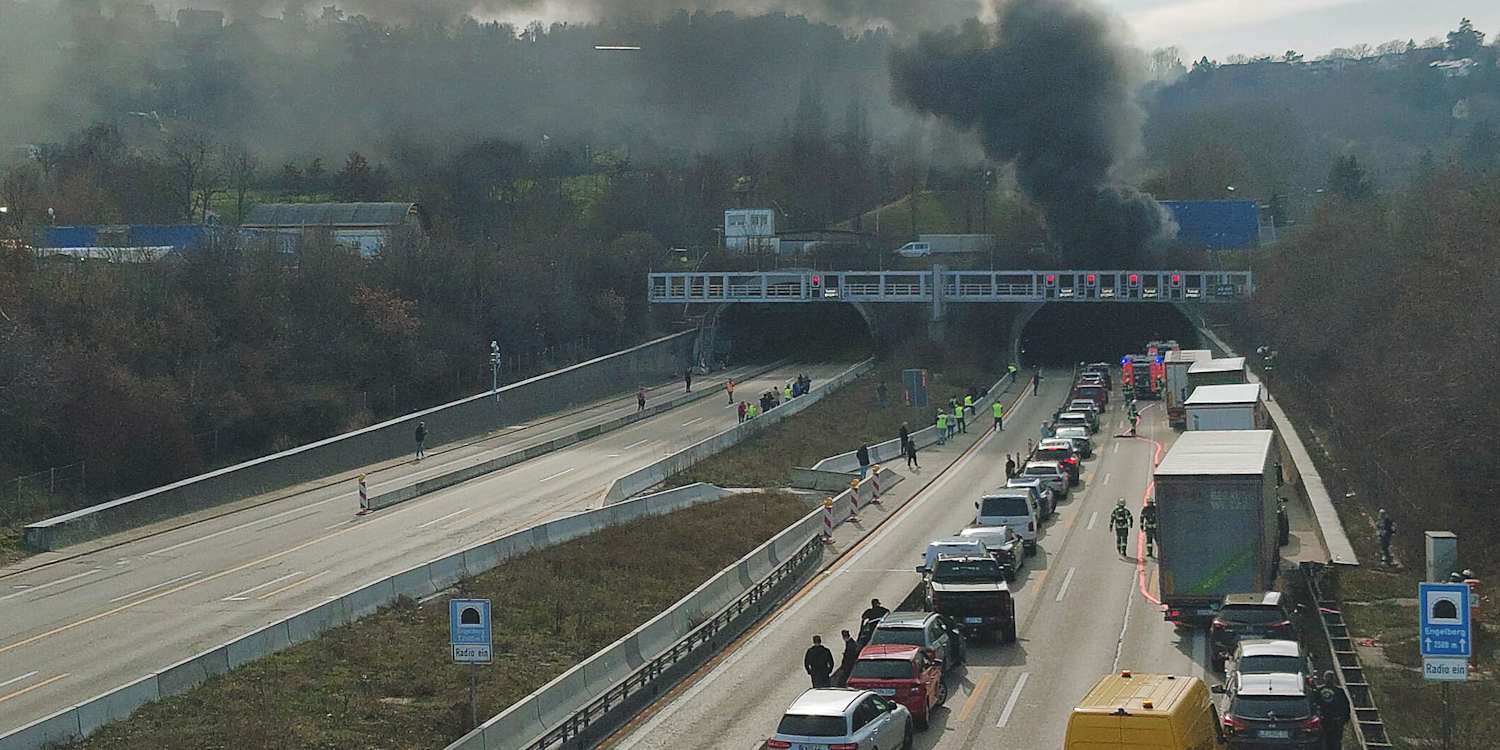
The Engelbergtunnel, a vital artery on Germany's A81 Autobahn, once again made headlines following a dramatic Unfall Engelbergtunnel. A truck trailer fire on Tuesday, March 3, 2026, around 14:20 CEST, brought the busiest motorway tunnel in Baden-Württemberg to a standstill, causing widespread disruption and highlighting the critical role of robust infrastructure and swift emergency response. While the Oströhre (east tube) has since reopened, offering a semblance of normalcy for commuters heading north, the Weströhre (west tube) remains indefinitely closed, grappling with the aftermath of extensive damage. This article delves into the incident's specifics, the colossal rescue effort, the severe infrastructural damage, and the ongoing implications for thousands of daily travelers.
The Incident Unfolds: What Happened at Engelbergtunnel?
On that fateful Tuesday afternoon, an Unfall Engelbergtunnel involving a truck trailer ignited a critical emergency. The incident occurred in the Weströhre, which carries traffic in the direction of Stuttgart, Karlsruhe, and München, specifically at the beginning of the tunnel portal. The trailer, reportedly laden with refrigerators, quickly became engulfed in flames, prompting an immediate and full closure of the Engelbergtunnel in both directions.
Eyewitnesses and initial reports described a rapidly escalating situation. Crucially, the truck driver demonstrated remarkable presence of mind and courage, managing to uncouple the burning trailer from the truck. This swift action prevented the fire from spreading to the tractor unit or other vehicles, potentially averting an even greater catastrophe. Meanwhile, an immense emergency response was mobilized. A staggering 386 rescue workers, operating 57 vehicles from various fire departments, paramedics, and police units, converged on the scene. Their immediate focus was on extinguishing the blaze and securing the area.
Despite the rapid response, the intense smoke and heat took their toll. Three individuals suffered from smoke inhalation, two of whom required hospitalization for further treatment. The third person declined medical transport. The sheer scale of the operation extended beyond treating the injured; rescue workers also attended to approximately 50 other individuals affected by the incident, underscoring the severity and widespread impact of the Unfall Engelbergtunnel. As the fire was brought under control, efforts shifted towards ventilating the tunnel, a critical step before damage assessment could begin.
Massive Damage and Lingering Concerns
The immediate aftermath of the fire revealed a grim picture of destruction within the Weströhre. Initial inspections by the Autobahn GmbH highlighted "massive concrete spalling on the tunnel ceiling" in the affected tube. This structural damage is a serious concern, as it indicates significant weakening of the tunnel's integrity due to the intense heat. Beyond the concrete, vital operational components were severely compromised:
- Tunnel Control Cables: The intricate network of cables responsible for managing traffic flow, lighting, and ventilation within the tunnel were melted and destroyed.
- Fire Alarm System: The very system designed to detect and alert authorities to fires like this one was itself rendered inoperable.
The charred remains of the truck trailer, reduced to little more than a skeletal frame, further illustrated the fire's ferocity. The process of clearing the wreckage was painstakingly slow and complex. According to the Autobahn GmbH, the burnt refrigerators had to be unloaded individually, extending the recovery efforts well into the evening. For safety reasons, power to the tunnel had to be completely shut down during the entire recovery operation, adding another layer of challenge. The extent of the damage meant that any decision on reopening the Weströhre could only be made after comprehensive safety checks, leaving its fate uncertain for an "indefinite" period.
This Unfall Engelbergtunnel is not an isolated incident. The Engelbergtunnel has a history of major disruptions, including a fire just last autumn. This recurring vulnerability raises important questions about tunnel safety protocols, maintenance, and the resilience of critical infrastructure against such emergencies.
A81 Reopening & Weströhre Closure: Navigating the Aftermath
In the hours following the fire, traffic on the A81 faced unprecedented challenges. The full closure of the Engelbergtunnel, Baden-Württemberg's busiest motorway tunnel, led to kilometer-long tailbacks and significant delays, particularly during the morning rush hour. Commuters heading towards Stuttgart were progressively diverted via the Feuerbach interchange (Anschlussstelle Feuerbach), a measure that, while necessary, contributed to congestion on alternative routes.
However, amidst the chaos, there was a glimmer of relief. By approximately 05:00 AM the following morning, the Oströhre, which handles traffic in the direction of Heilbronn, was successfully reopened. This phased reopening was a testament to the swift assessment and clearance efforts by emergency services and tunnel operators. While traffic flow resumed in the northbound direction, the critical Weströhre, serving southbound traffic towards Singen/Karlsruhe, remained closed. An immediate local diversion route was put in place to manage the displaced traffic, but the sheer volume means ongoing disruptions are unavoidable.
The Engelbergtunnel, a crucial link in Germany's national and international road network, typically handles an immense volume of traffic daily. Its partial closure, particularly of the southbound tube, has a ripple effect across the region's transport infrastructure. Drivers are strongly advised to:
- Check Real-Time Traffic Information: Utilize navigation apps, radio reports, and official traffic websites for the latest updates.
- Plan Alternative Routes: Consider alternative motorway sections or allow significantly more travel time if your journey involves the A81 near Stuttgart.
- Follow Diversion Signs: Adhere strictly to the established local diversion routes to avoid further congestion and ensure safety.
- Exercise Patience: Expect delays and remain calm to prevent further incidents.
The indefinite closure of the Weströhre underlines the severity of the Unfall Engelbergtunnel and the complexity of repairing such essential infrastructure. While every effort is being made to expedite the safety checks and repairs, commuters must prepare for a prolonged period of altered traffic conditions.
Impact Beyond the Tunnel: Wider Implications and Future Outlook
The Unfall Engelbergtunnel is more than just a traffic incident; it's a stark reminder of the vulnerabilities inherent in critical infrastructure and the cascading effects when such vital links are disrupted. As Baden-Württemberg's busiest motorway tunnel, its partial closure has significant economic implications for logistics, trade, and commuting patterns in the region. Businesses relying on the A81 for timely deliveries will face increased costs and delays, while daily commuters will endure longer travel times and potential impacts on productivity.
Looking ahead, the incident prompts a deeper examination of tunnel safety and resilience. While Germany has some of the most stringent tunnel safety standards, events like this underscore the constant need for vigilance, technological advancement, and robust emergency protocols. Lessons learned from this fire, from the materials used in tunnel construction to the sophistication of fire suppression and ventilation systems, will undoubtedly contribute to future safety enhancements across the country's extensive tunnel network.
The repairs to the Weströhre will be a monumental task, involving not only structural integrity assessments and concrete repairs but also the complete replacement of complex electrical and control systems. The exact duration remains unknown, pending detailed evaluations. This ongoing situation serves as a powerful testament to the daily challenges faced by infrastructure managers in maintaining the lifelines of modern economies. For the foreseeable future, drivers traveling through this crucial corridor must stay informed and adapt their travel plans, understanding that the aftermath of the Unfall Engelbergtunnel will continue to shape their journeys for some time to come.
The Engelbergtunnel fire stands as a potent reminder of the fragility of even the most robust infrastructure in the face of unforeseen emergencies. While the reopening of the Oströhre offers some relief, the indefinite closure of the Weströhre signals a prolonged period of adjustments for thousands of commuters and businesses alike. As authorities work tirelessly to assess and repair the damage, the focus remains on ensuring safety and restoring full functionality to this indispensable link on the A81. Drivers are urged to stay informed, plan ahead, and exercise patience as the region navigates the complex aftermath of this significant Unfall Engelbergtunnel.