Engelbergtunnel Inferno: Truck Fire, Massive Damage, & Heroic Actions
The serene routine of a Tuesday afternoon on Germany's A81 was shattered on March 3, 2026, when a catastrophic truck fire erupted inside the Engelbergtunnel. What began as a seemingly isolated incident quickly escalated into a full-scale inferno, causing massive structural damage, triggering a monumental emergency response, and unleashing unprecedented traffic chaos across Baden-Württemberg. This dramatic **Unfall Engelbergtunnel** highlighted the vulnerability of critical infrastructure and underscored the heroism of those who faced the flames head-on.
The Inferno Unfolds: A Timeline of Disaster and Heroism
Around 14:20 on that fateful Tuesday, a truck trailer laden with refrigerators caught fire in the Weströhre (west tube) of the Engelbergtunnel, a vital artery for southbound traffic on the A81 towards Stuttgart and Singen. The exact cause of the blaze remains under investigation, but its immediate impact was devastating. As smoke billowed and flames rapidly consumed the trailer, the situation inside the two-and-a-half-kilometer-long tunnel quickly became perilous.
Amidst the burgeoning flames, a moment of extraordinary presence of mind and courage unfolded. The truck driver, realizing the imminent danger, managed to uncouple the burning trailer from the tractor unit. This decisive action proved critical, preventing the fire from spreading to the entire vehicle and potentially to other vehicles nearby, averting an even larger catastrophe. His swift, heroic deed bought precious time for emergency services to mobilize and for tunnel occupants to evacuate.
The initial reports led to an immediate full closure of the Engelbergtunnel in both directions. Firefighters, paramedics, and police units converged on the scene, launching a massive coordinated response. Commuters found themselves stranded in kilometer-long traffic jams, as vital connections were severed and detours initiated across the region. The sheer scale of the incident quickly became apparent, demanding an all-hands-on-deck approach from various emergency services.
Massive Damage and Unprecedented Rescue Efforts
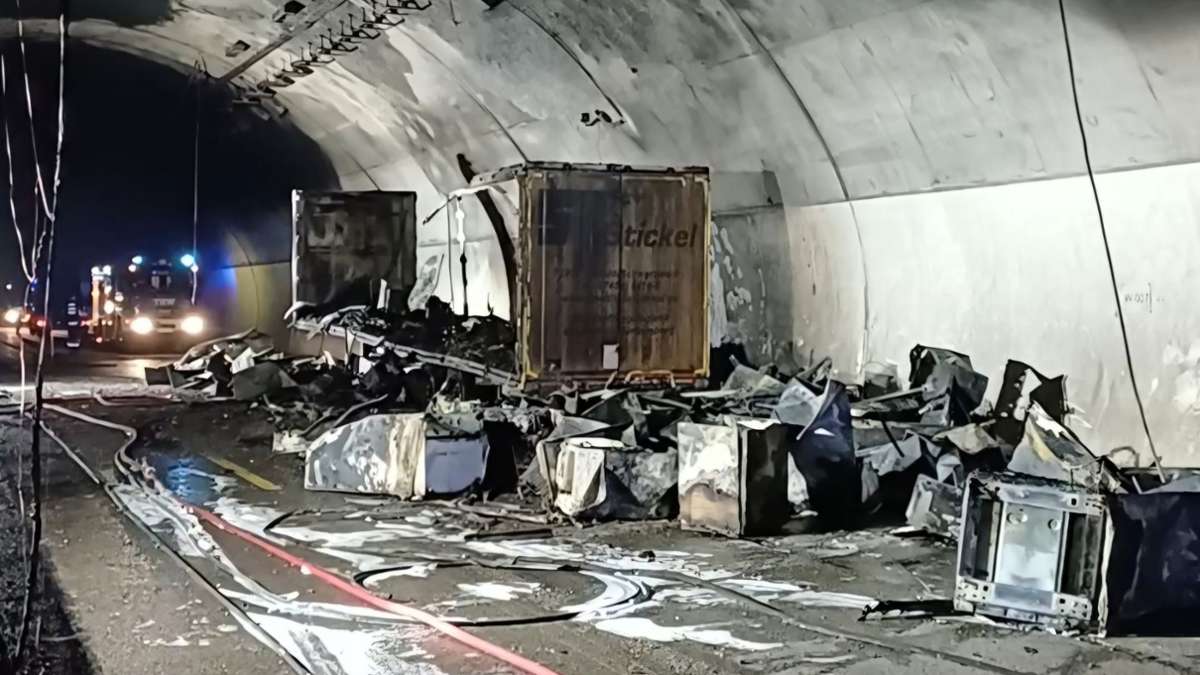
The scale of destruction within the Weströhre was immediately apparent, revealing a scene akin to a war zone once the flames were brought under control. The intense heat generated by the burning refrigerators caused severe damage to the tunnel's concrete structure. Initial assessments revealed "massive concrete spalling" on the tunnel ceiling, a critical concern for structural integrity. Beyond the visible concrete damage, the inferno had silently wreaked havoc on the tunnel's sophisticated operational systems. Crucial control cables, essential for lighting, ventilation, and traffic management, were completely melted, and the entire fire alarm system was destroyed. What remained of the truck trailer was a mere skeletal wreck, a testament to the fire's ferocious intensity.
The response to this **Unfall Engelbergtunnel** was nothing short of monumental. A staggering 386 rescue workers, operating with 57 vehicles, were deployed to the scene. Their efforts were multi-faceted: battling the blaze, ensuring the safety of tunnel users, and providing immediate medical care. While the truck driver's heroism prevented widespread casualties, three individuals suffered from smoke inhalation, two of whom required hospital treatment. Additionally, paramedics attended to approximately 50 other people who were affected by the smoke and the stressful situation.
The recovery process itself presented significant challenges. With the burnt refrigerators requiring individual unloading and removal, the process was protracted, extending late into the evening. For safety reasons, the entire power supply within the tunnel had to be shut down during these complex operations. Given its reputation as the busiest motorway tunnel in Baden-Württemberg, the prolonged closure of the Engelbergtunnel had immediate and profound logistical implications. To understand the broader context of this incident, you can delve deeper into its significance by reading our detailed analysis:
A81 Engelbergtunnel Fire: Impact on Germany's Busiest Tunnel.
Navigating the Aftermath: Road Closures, Detours, and Future Outlook
The immediate aftermath of the **Unfall Engelbergtunnel** plunged a vital artery of Germany's road network into disarray. While emergency crews worked tirelessly, the focus shifted to managing the immense traffic disruption and planning for the arduous repair work ahead. By Wednesday morning, March 4, around 05:00, there was a glimmer of relief: the Oströhre (east tube), carrying traffic in the northbound direction towards Heilbronn, was successfully reopened. This partial reopening helped alleviate some of the pressure on the regional road network.
However, the outlook for the Weströhre, the site of the inferno and the southbound passage, remained grim. Due to the extensive and severe structural damage, including compromised concrete and destroyed electrical and safety systems, the Weströhre was announced to be closed indefinitely. A local detour was immediately established, funneling southbound traffic off the A81 at the Feuerbach interchange and directing it along alternative routes. Drivers were strongly advised by the police to generously bypass the affected area and allow for significant extra travel time.
The indefinite closure of such a critical infrastructure piece poses significant challenges for daily commuters, logistics companies, and regional businesses. The Engelbergtunnel is not merely a segment of the A81; it's a linchpin connecting major economic centers. The timeline for reopening the Weströhre could only be determined after comprehensive safety inspections and extensive repair planning, with estimates pointing towards a prolonged period of disruption. For the latest updates on the A81 and the Engelbergtunnel's reopening status, particularly concerning the Weströhre closure, we recommend checking out:
Engelbergtunnel Fire: A81 Reopening & Weströhre Closure Latest.
Practical Tips for Drivers:
- Stay Informed: Regularly check local traffic news, radio broadcasts, and reliable online navigation services (e.g., Google Maps, ADAC) for real-time updates.
- Plan Ahead: If your route usually involves the A81 through the Engelbergtunnel, seek alternative routes well in advance.
- Allow Extra Time: Detours often lead to congestion on smaller roads, significantly increasing travel times.
- Consider Public Transport: For regional travel, evaluate public transport options as a potentially less stressful alternative.
- Be Patient: Traffic jams are inevitable. Maintain calm, avoid aggressive driving, and be considerate of other road users.
Preventing Future Catastrophes: Lessons from the Engelbergtunnel
The catastrophic **Unfall Engelbergtunnel** serves as a stark reminder of the immense destructive potential of tunnel fires and the critical importance of robust safety measures. This incident, following a previous fire in the same tunnel last autumn, underscores the ongoing vulnerability of even modern infrastructure to such events. While the exact cause of the truck fire on March 3, 2026, is still under investigation, several key takeaways emerge for enhancing future tunnel safety.
One primary focus must be on advanced fire detection and suppression systems. Modern tunnels are equipped with sophisticated sensors and ventilation systems designed to extract smoke and maintain tenable conditions, but the complete destruction of the Engelbergtunnel's fire alarm system highlights a need for more resilient, redundant systems that can withstand extreme conditions. Furthermore, enhancing immediate response capabilities, including specialized tunnel firefighting equipment and rigorous training for emergency personnel, is paramount.
Another crucial aspect is cargo safety. While refrigerators might not immediately seem like highly flammable cargo, the sheer volume and the presence of plastics, insulating materials, and refrigerants can contribute to an intense and difficult-to-extinguish blaze. Regulations concerning the transport of goods, particularly in enclosed spaces like tunnels, may need re-evaluation to identify potential risks and implement preventive measures. Driver vigilance and adherence to safety protocols for cargo securing and vehicle maintenance are also essential lines of defense. The heroic actions of the truck driver in uncoupling the trailer underscore the invaluable role of human intervention and quick thinking in mitigating disaster. Investments in intelligent traffic management systems that can swiftly detect incidents and initiate emergency procedures are also vital for minimizing exposure and facilitating rapid evacuation.
Conclusion
The **Unfall Engelbergtunnel** of March 3, 2026, will be remembered as a day of dramatic events, widespread disruption, and profound heroism. The inferno that gutted the Weströhre of Germany's busiest tunnel inflicted massive damage, demanding an extraordinary response from hundreds of dedicated emergency personnel. While the Oströhre has since reopened, the indefinite closure of the southbound tube highlights the long and challenging road to recovery and repair. This incident serves as a powerful testament to the resilience of human spirit in the face of disaster and a critical lesson in the ongoing pursuit of safer infrastructure and more effective emergency preparedness. As the A81 slowly heals, the lessons learned from this catastrophic event will undoubtedly shape future strategies for tunnel safety, ensuring that such an inferno can, hopefully, be prevented or better contained in the years to come.